
How to Move On After Coal? A Journey Through Northern Bohemia Between Structural Change, Grassroots Engagement, and Glimmers of Hope
Fieldtrip through Norhern Bohemia July 11 – 13th, 2025 by our partners from Attac Österreich
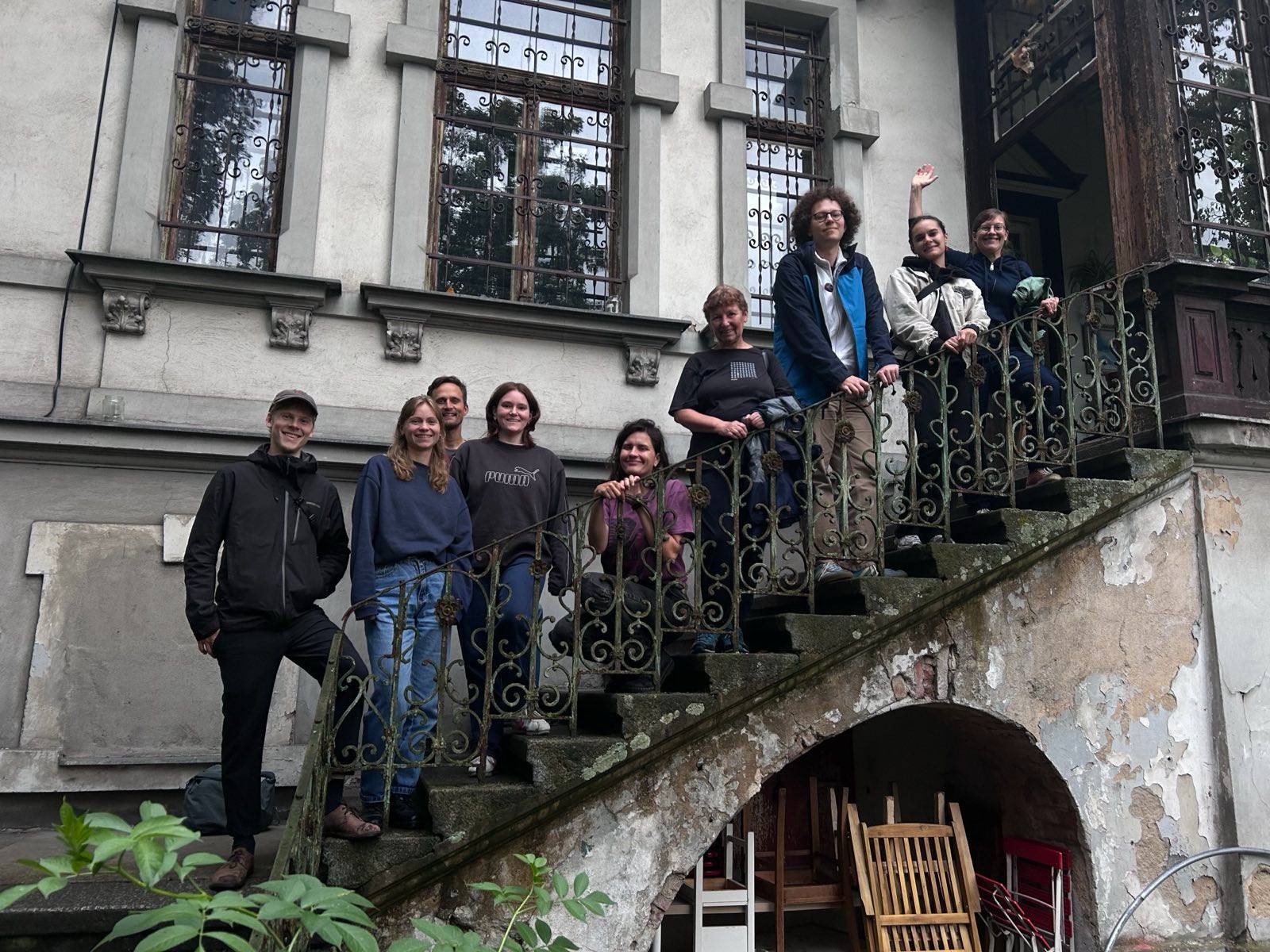
On July 11th, around noon, we left Vienna Central Station and headed to Děčín, Czech Republic. Six hours later, we arrived. Mikuláš picked us up at the station and led us to Villa Diana – the house project where he and Katerina live, both of whom work at Reset. The beautiful Art Nouveau villa was bought three years ago through crowdfunding and has been renovated by the collective since then. The result is impressive. The house project also serves as the starting point for the local energy community that Reset is working to establish – and it's the foundation for our Erasmus collaboration.
After a delicious dinner and a brief introduction to the house and the project, Jirka Mašín joined us. Originally from the Děčín area, he shared a lot about the region’s history and its recent transformations: which parts of the city have changed, why property prices are rising sharply – as they are in the rest of the Czech Republic – and why coal plays such a big role. For him, building sustainable alternatives outside the grip of large corporations is essential.
Janov–Litvínov
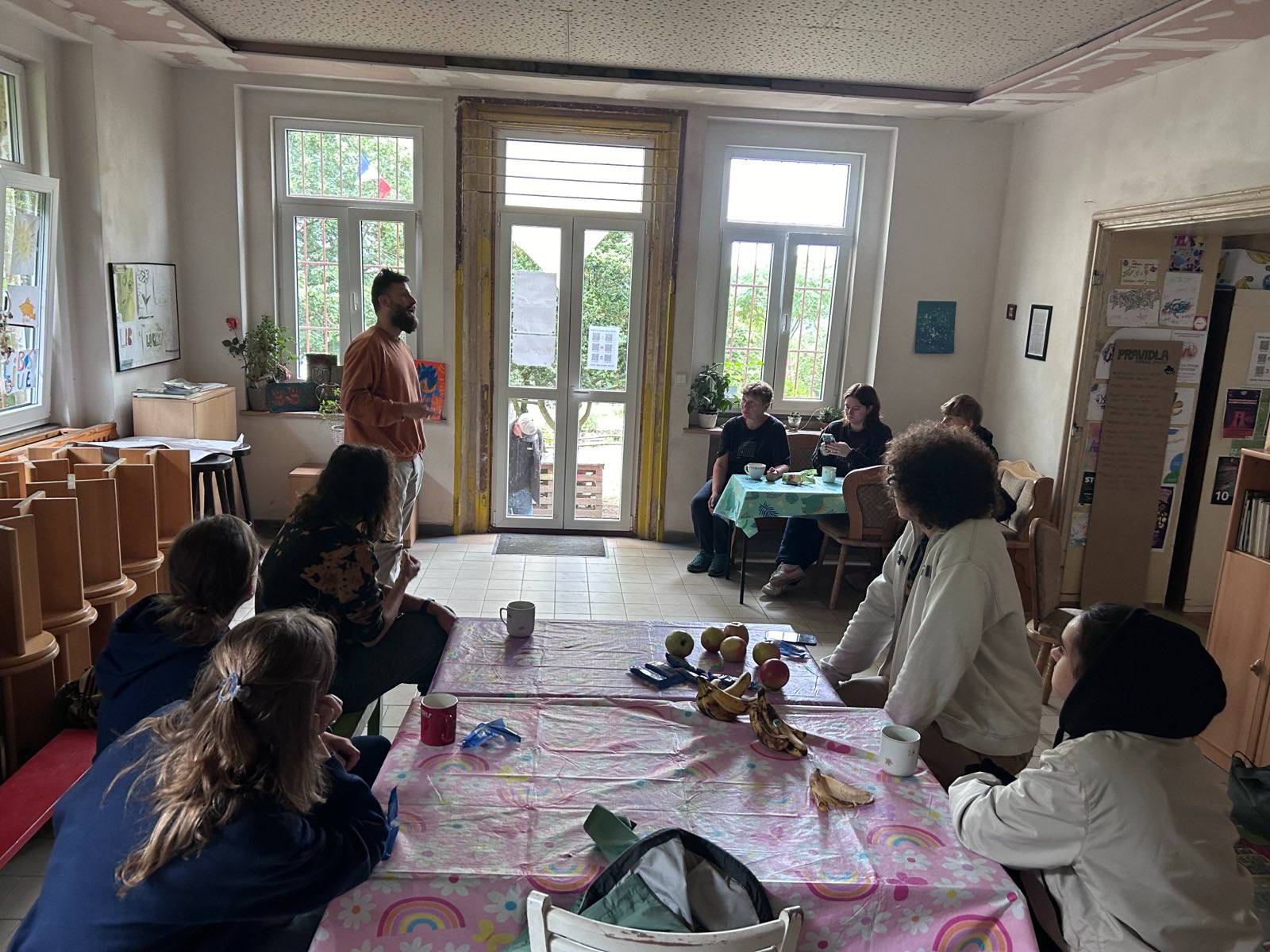
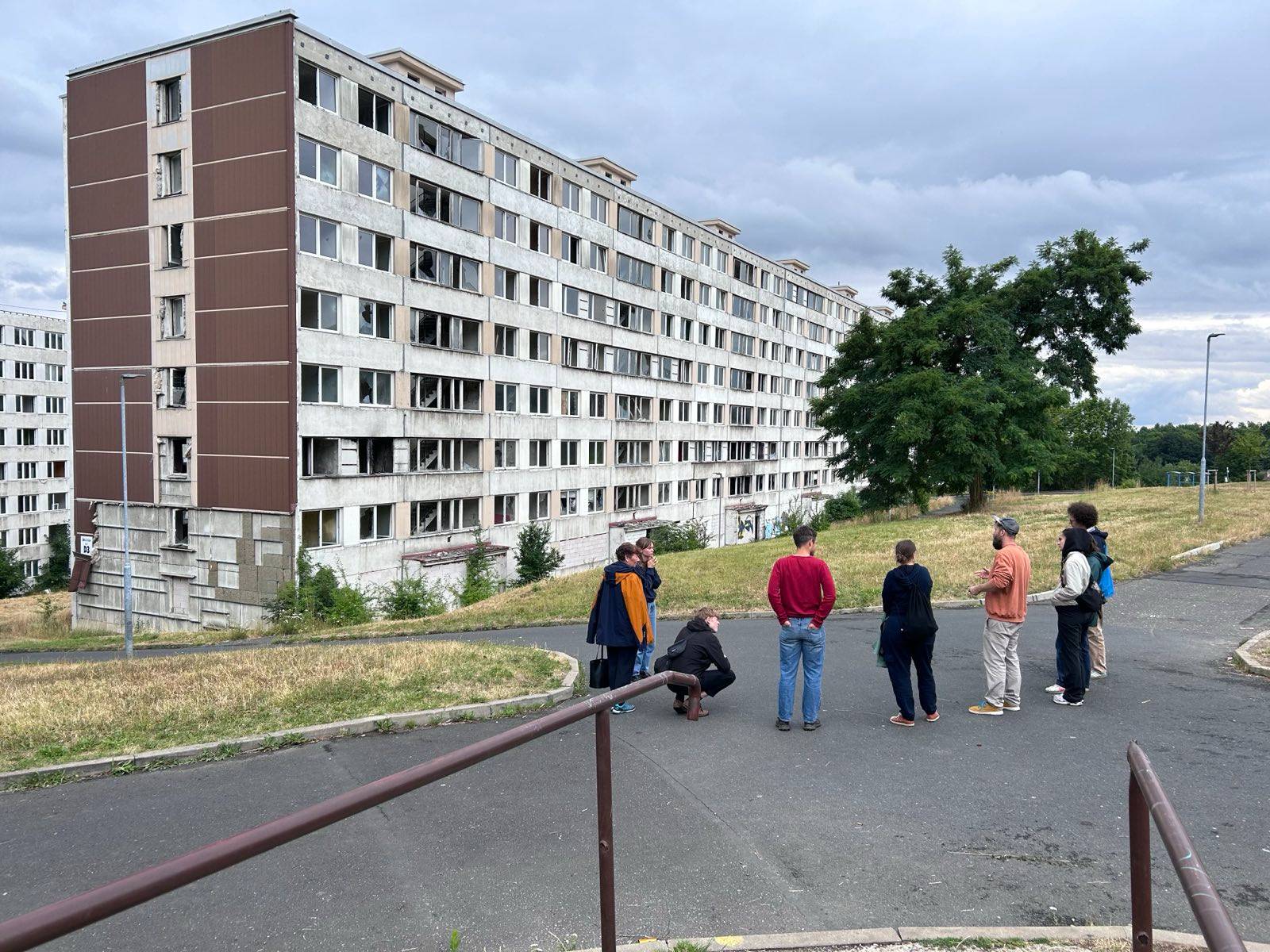
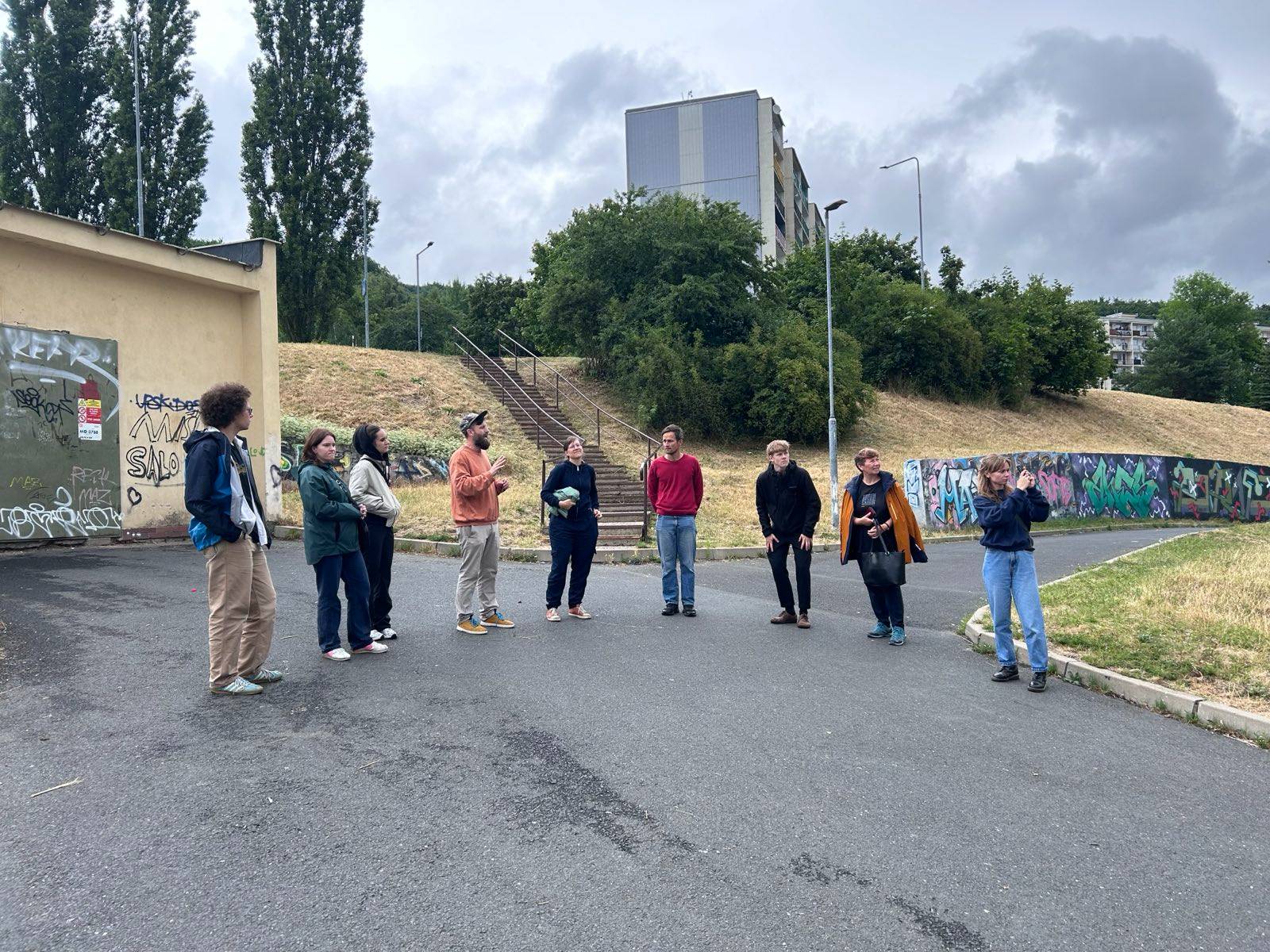
The next morning, we got up early and took the train to Janov–Litvínov, to visit the Community Centre Libuše run by the MY Litvínov association. Petr Globočník, a social worker and climate activist, knows the neighborhood well and guided us through it. He explained that the housing estate was originally built for workers in the chemical and coal industries and is now primarily home to Roma families. The area has long been neglected by political decision-makers, he said, and the millions flowing into "Just Transition" projects often fail to reach the local population. That’s why he and other activists decided to establish a social center that allows for work on equal footing – and so Libuše was born.
The Libuše 2024 project aims to sustainably improve living conditions in the Northern Bohemian district of Janov – with a strong focus on the Roma community. The goal is to engage local residents, especially Roma, in solving community issues, strengthen their participation in public life, and foster better neighborhood relations. A regional Roma platform is being created to represent local interests and amplify their voices. Through training, joint activities, and a core local working group, civic competencies are being supported. The Libuše Neighborhood House is becoming a place for encounters, leisure, and collective engagement. The project brings together Roma and pro-Roma organizations, works closely with the city of Litvínov, and aims to help shift the public image of Roma in the Czech Republic.
One of Petr’s biggest achievements – besides renovating the house and growing a beautiful garden – is the Ghetto Festival, which the community organizes once a year and which attracts hundreds of visitors. He’s also fighting to have derelict buildings in the neighborhood torn down and new public spaces for community life built. The political process is slow, he says, and success comes in small “baby steps.” After seven years of political work, he can count four significant wins – but he’s not discouraged. He keeps going.

Horní Jiřetín
The theme of perseverance followed us into the afternoon. We said goodbye to Petr and continued to Horní Jiřetín – a village known for its coal resistance. The municipality had once been slated for demolition to make way for mining, but residents resisted. Through protest and grassroots organizing, they managed to save their community.
Mikuláš, who is writing his PhD dissertation on the coal resistance, explained just how hard the fight was – and how, now that coal mining is being phased out, new debates are emerging: What should happen to the open-pit mines and the jobs they once provided?
We stood on the edge of the vast coal pit, barely able to grasp its size. In that moment, a bird of prey flew past us, prey in its beak – and we wondered how long it might take for nature to reclaim this scarred landscape.
In the meantime, residents have built their own sustainable energy system. They even laid down local power lines to share solar electricity among households. This locally generated power supports a more democratic and independent form of energy supply.
A lot of funding is flowing into the region, especially through the EU’s Just Transition Fund. But in Horní Jiřetín, this money mostly goes to the former coal company – which is now supposed to manage the “green transition.” Yet, as both Petr and Mikuláš point out, few of the promised projects have materialized so far, and no one really knows where the money is going – least of all the people on the ground.
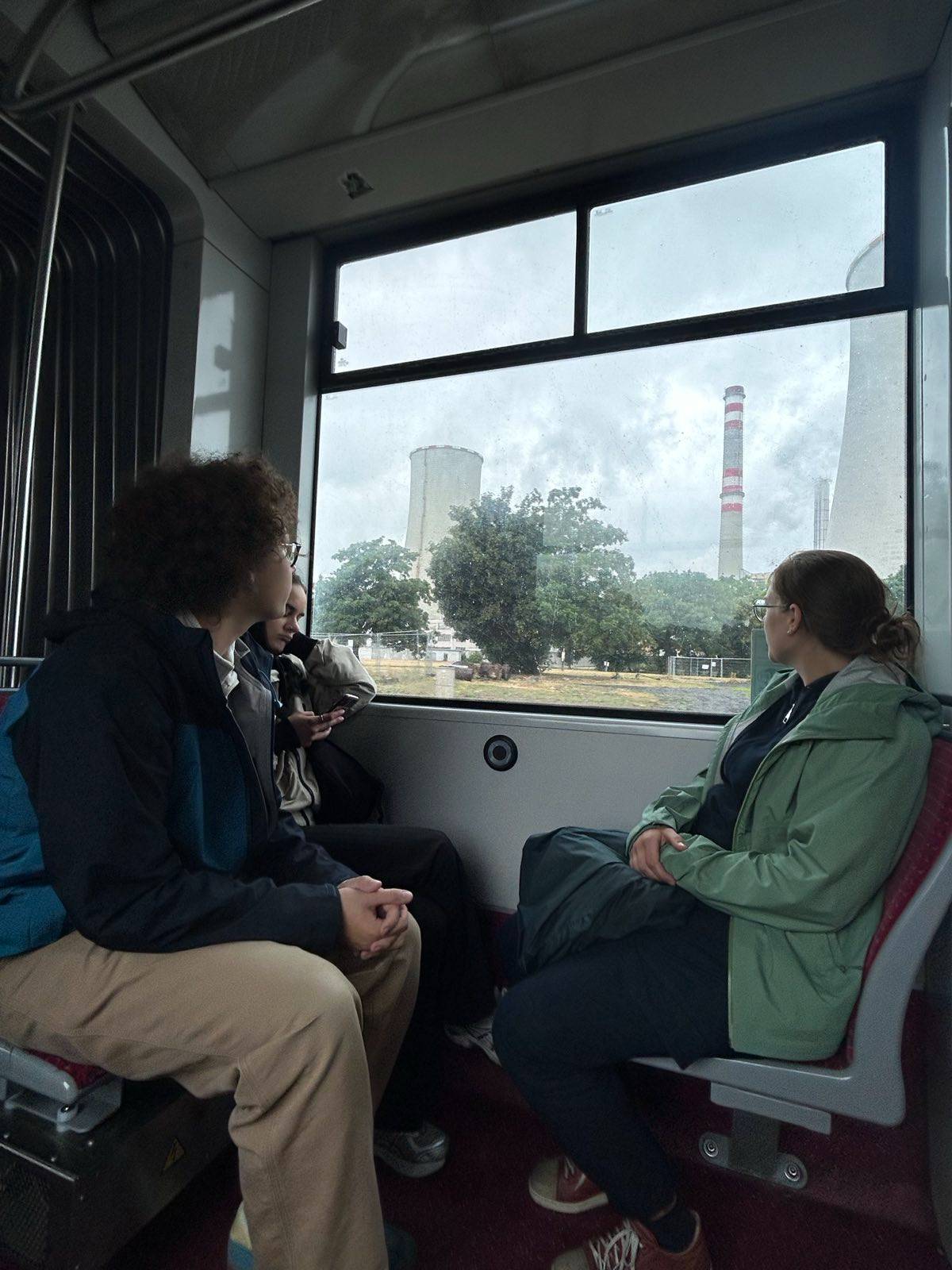
These impressions lingered as we took a tram through an enormous chemical refinery that produces plastic. It dwarfed anything we had ever seen – even the OMV site near Schwechat seemed small in comparison. Our last stop of the day was the city of Most.
Most
Most was not spared from the destructive forces of coal mining. In the 1960s and 70s, the medieval city was demolished and relocated. Only its Gothic church was preserved – famously moved one kilometer on tracks during the socialist era to save it as a cultural monument. We looked at archival photos in disbelief, showing how the church was stabilized and transported, and how the destroyed city was later used as a film set – for productions like All Quiet on the Western Front.
We climbed the church tower and looked out over the transformed landscape: the modern-day Lake Most, which now fills the site of the former medieval town, and the old open-pit mine beyond it. It took over 20 years to fill the pit with water and create what is now a recreational area. We were deeply moved by how drastically the landscape has changed. Most is a stark example of how energy industries have shaped – and continue to shape – the region.
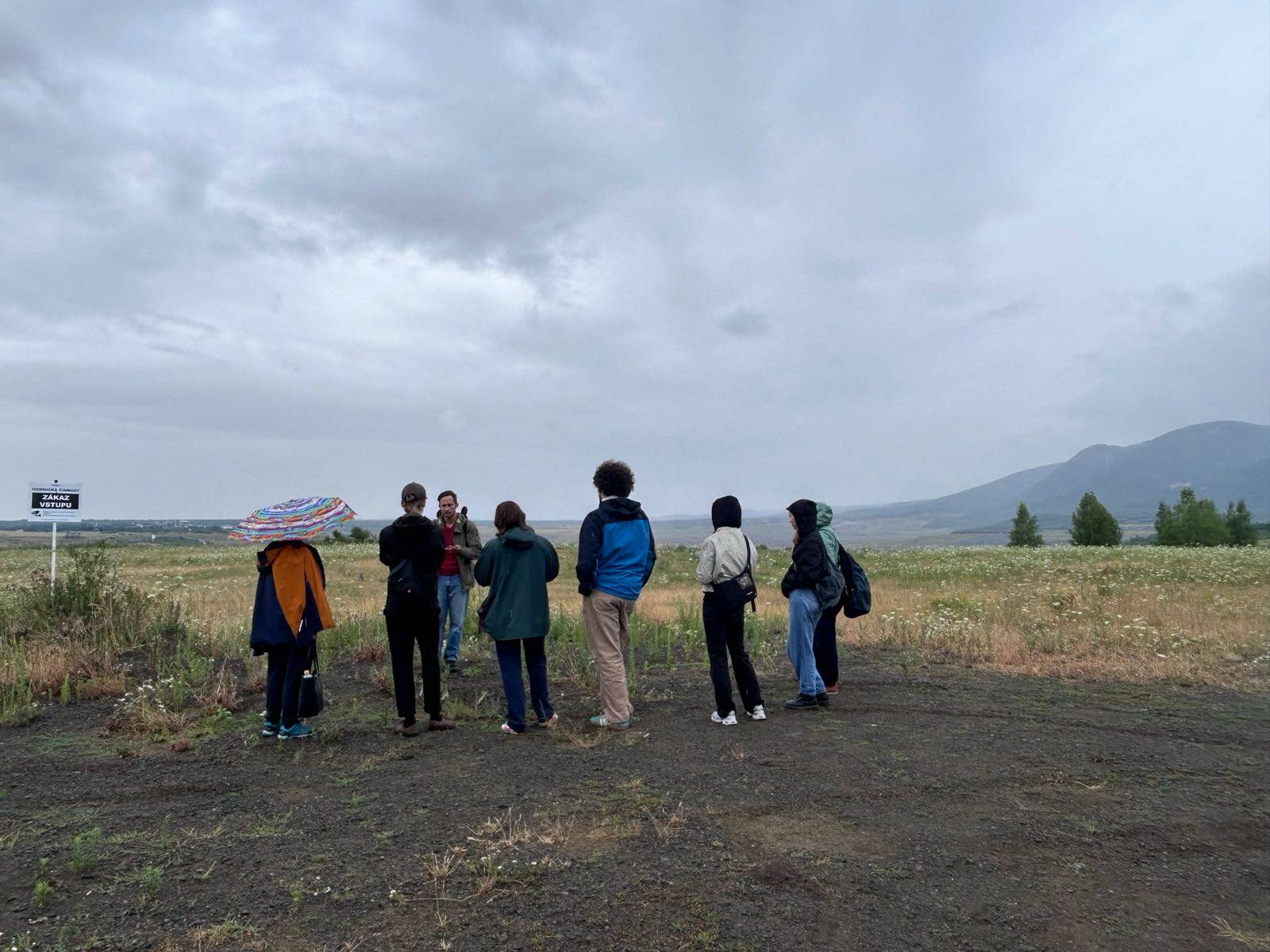
In the evening, we sat down with Katerina, Anna, and Mikuláš to reflect on everything we had seen and heard. Anna showed us a video by an artist that juxtaposes historical Northern Bohemia – once an aristocratic spa region – with today’s coal region, where lithium mining and hydrogen production are being planned. Whether the population will have a say in these developments remains unclear. Aside from the impressive grassroots projects we encountered, the path toward a truly democratic energy future is still uncertain.
And yet, our encounters with Petr, Mikuláš, Katerina, and Anna made one thing clear: This region is not lacking in courageous, creative, and determined people working for a better future.

New publication: Community Energy for All
How to Move On After Coal? A Journey Through Northern Bohemia Between Structural Change, Grassroots Engagement, and Glimmers of Hope
